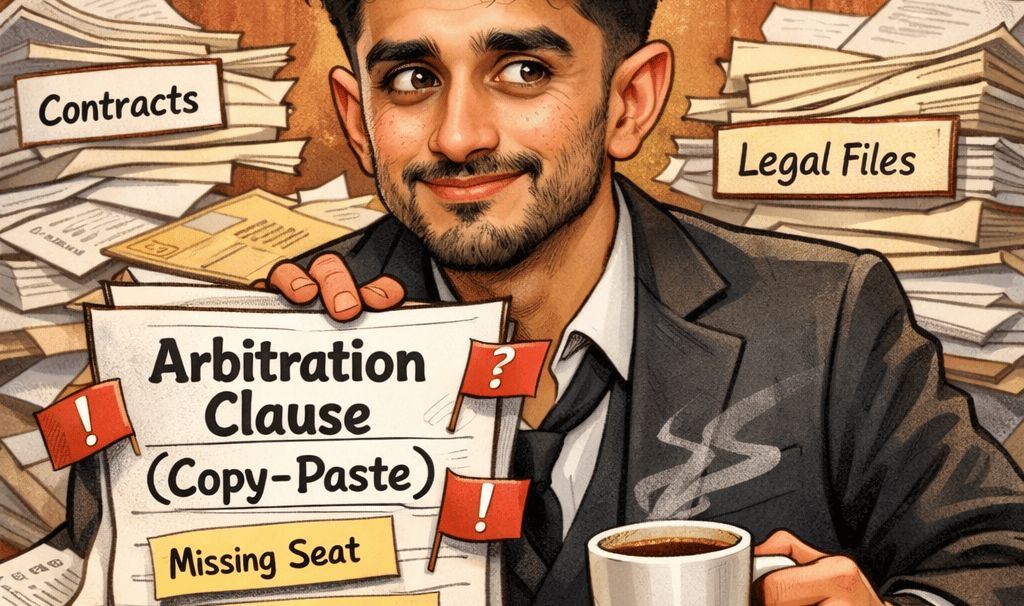
“It’s just a boilerplate clause… copy-paste it.” — famous last words.
If I had a rupee for every time I’ve heard this about arbitration clauses, I’d have probably funded a few arbitrations myself by now. Truth is, I’ve seen disputes collapse before they even begin—not because the parties lacked a case, but because someone treated the arbitration clause like fine print. I’ve come across agreements (yes, even between big corporates) where: The seat of arbitration was missing or casually worded. Parties confused venue with seat, and courts had no option but to reject the clause. 👉 “Arbitration will be held in Bengaluru” is not enough. The seat decides procedural law and which courts have supervisory jurisdiction. It must be clear. The language of arbitration wasn’t specified. Suddenly, the fight wasn’t about the dispute—but whether proceedings should be in English or Kannada. The tribunal constitution was so poorly drafted that parties had to rush to court just to appoint arbitrators—defeating the very purpose of ADR. No clarity on basics: Single arbitrator or three? Who appoints them? What if one party doesn’t nominate after receiving a notice? And the classic disaster clause: “If arbitration fails, parties shall approach the court.” ❌ No. Arbitration is meant to be final and binding, not a warm-up round for litigation. Courts won’t reopen merits unless there’s a procedural failure. Over time, I’ve come to believe this: 👉 We don’t just need arbitration. 👉 We need better thought-out arbitration. Personally, I’m a strong believer in Med–Arb–Med in many cases. Mediate first. If it fails, arbitrate. And even during arbitration—keep the door open for settlement. Because not every dispute needs to be a battle. ✨ Don’t treat arbitration clauses as an afterthought. They deserve the same care as commercial terms—because when things go wrong, this one clause decides whether you solve the problem… or spiral deeper into it.
2/8/20261 min read