Fortresses Don’t Always Win Cases
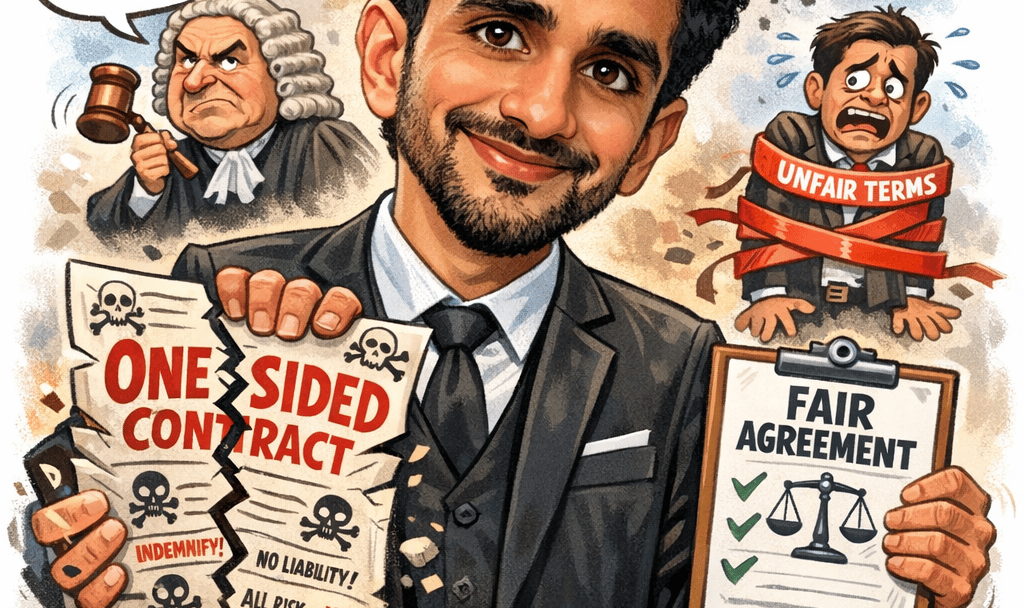
In my growing experience as a corporate advocate, I’ve seen contracts drafted like fortresses—every possible risk pushed onto one party, every clause screaming maximum protection. On paper, they look bold. Impressive. Airtight. But courts don’t admire intimidation. They examine fairness. A contract, even if signed willingly, can fail if it is unfair, unreasonable, or oppressive. Standard-form agreements—where one party drafts and the other merely signs—are especially vulnerable. Courts may step in, interpret ambiguities against the drafter, or strike down clauses that offend equity and natural justice. A good contract doesn’t dump risk. It distributes it. A bad one overreaches—and weakens itself. Real enforceability comes from clarity, balance, and practicality: clear language, reasonable indemnities, fair allocation of risk, and neutral dispute resolution. When we draft or vet agreements, the goal isn’t to build a legal bunker. It’s to create a contract that is legally sound, commercially fair, and practical enough to survive court scrutiny. Because in law, balance outlasts bravado.
2/8/20261 min read